

AeroVironment has secured a significant five-year contract valued at $874.26 million from the U.S. Army Contracting Command. This Indefinite Delivery, Indefinite Quantity (IDIQ) agreement will facilitate foreign military sales, allowing allied and partner nations to acquire the company’s battle-proven unmanned and counter-unmanned aerial systems.
The contract enables the procurement of AeroVironment’s comprehensive portfolio of Group 1-3 unmanned aerial systems (UAS) and counter-UAS (C-UAS) solutions. Available systems include the JUMP 20™, P550™, Puma™, Raven™, and Titan C-UAS™, along with associated training, spares, and logistics support. This streamlined mechanism is designed to accelerate the delivery of critical capabilities to global partners.
“We are delivering innovative defense technologies to meet our national security priorities – at home and abroad,” said Justin McFarlin, Vice President of International Business Development for AV. He emphasized that the company’s autonomous systems provide warfighters with essential mission flexibility, situational awareness, and protection in lightweight, deployable platforms.
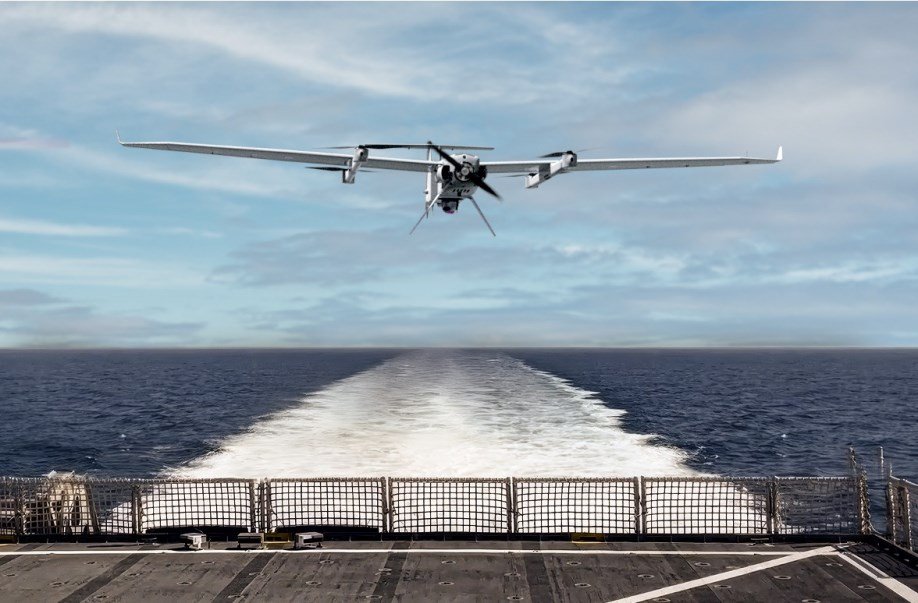
The contract covers a versatile range of systems. The JUMP 20 is a vertical takeoff and landing (VTOL) fixed-wing UAS offering over 13 hours of endurance for intelligence, surveillance, and reconnaissance (ISR). The newer P550, a Group 2 eVTOL, features rapid payload swapping and AI-driven autonomy for up to five hours of battery-powered operation. The rugged, portable Puma is designed for both land and maritime missions in extreme environments.
Also included is the hand-launched Raven, the world’s most widely deployed small UAS for low-altitude ISR. For defense against hostile drones, the contract offers the Titan system, a radio frequency-based C-UAS that can detect and defeat threats in urban or rural settings, with over 1,000 units already operationally deployed.
“AV’s platforms are deployed around the world, supporting the most important missions for our national security and the protection of our allies,” said Jason Hendrix, Vice President of Small Uncrewed Systems. The company states it continuously integrates frontline feedback into its platforms, scaling production to ensure warfighters maintain an edge against evolving threats.
