

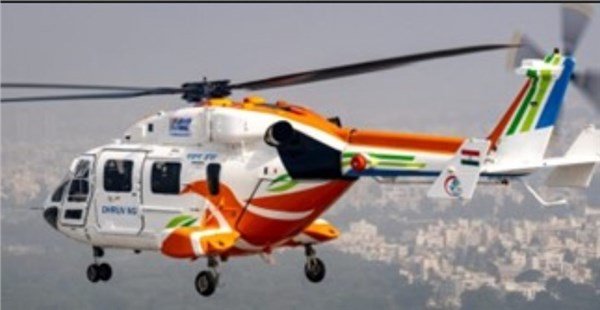
Moog Inc. has announced a significant achievement with the successful inaugural flight of its innovative Genesys Avionics Suite™ integrated into Hindustan Aeronautics Limited’s (HAL) new Advanced Light Helicopter (ALH) Dhruv NG. This milestone, observed by officials from the Indian Ministry of Civil Aviation, represents a major advancement for India’s multi-role helicopter program, emphasizing rapid deployment and enhanced operational capabilities.
The newly equipped ALH now features a modern glass cockpit powered by Moog’s cutting-edge suite, designed to dramatically improve pilot situational awareness and mission effectiveness. Key benefits of the integrated system include a Synthetic Vision System for safer operations in poor visibility, intuitive Highway-In-The-Sky navigation displays, seamless interfaces with the helicopter’s Full Authority Digital Engine Control (FADEC) for peak engine performance, and direct integration with the onboard autopilot to minimize pilot workload. The cockpit is completed by comprehensive, custom-designed multi-function displays tailored for helicopter missions.
Remarkably, Moog accomplished this complex integration in under 11 months—a process that typically requires two years or more. This accelerated timeline was made possible through Moog’s patented Open Architecture System Integration Symbology (OASIS) interface and through close, agile collaboration between Moog’s global engineering teams and its local experts in India, working in partnership with HAL.
“This successful first flight in a record timeframe underscores Moog’s position at the forefront of rapid aerospace innovation and integration,” said Sunny Kalsi, Business Development Lead for Moog Avionics in India. “Our strong partnership with HAL was instrumental in delivering a fully integrated, high-performance glass cockpit solution that meets the stringent demands of modern and future helicopter operations.”
This achievement marks a transformative step for the ALH platform, showcasing how advanced avionics can be rapidly deployed to enhance the utility, safety, and performance of essential aviation assets.
