

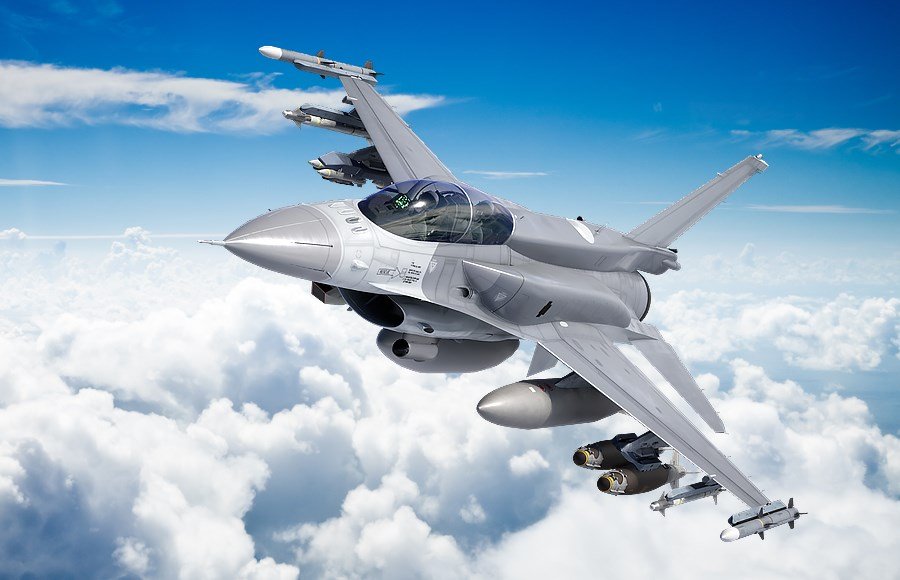
Lockheed Martin has received a $328.5 million Foreign Military Sales contract to produce Legion-ES IRST21 sensor systems for the Taiwan Air Force’s F-16 fleet. The award marks the first international deployment of this advanced infrared search-and-track configuration, following its integration onto U.S. aircraft.
The Legion-ES system represents the next evolution in passive air-to-air sensing. Utilizing long-wave infrared technology, it detects and tracks airborne threats at extended ranges without emitting detectable signals—denying adversaries the ability to warn or counter-detection. Unlike radar, IRST21 operates effectively in contested environments saturated with electronic warfare, offering a survivable, complementary targeting solution.
Designed specifically for the F-16, the embedded, low-profile Legion-ES configuration integrates directly into the aircraft fuselage. This preserves aerodynamic performance and external hardpoints for additional munitions or pods. The system provides high-accuracy tracking data that accelerates pilot reaction time and enhances overall mission effectiveness against advanced threats.
Cristin Stengel, Lockheed Martin’s IRST21 program director, emphasized the milestone nature of the award. “Taiwan becomes the first international partner to receive the Legion-ES IRST21 configuration,” she stated. “This system will bring advanced passive sensing capability to strengthen situational awareness, accelerate decision-making and support our allied air forces.”
The Legion-ES builds upon more than 300,000 flight hours accumulated across Lockheed Martin’s legacy IRST family. This operational pedigree informs a design focused on reliability, sensor fusion, and low-observability integration. For Taiwan, the capability fills a critical gap in detecting modern airborne threats under radar-denied conditions, enabling defensive responses earlier and with greater precision.
As peer and near-peer competitors expand their own sensor and stealth capabilities, passive infrared tracking has re-emerged as a vital layer of Western air combat architecture. The Legion-ES contract signals both U.S. commitment to allied modernization and the growing export viability of non-radar sensing technologies.
