

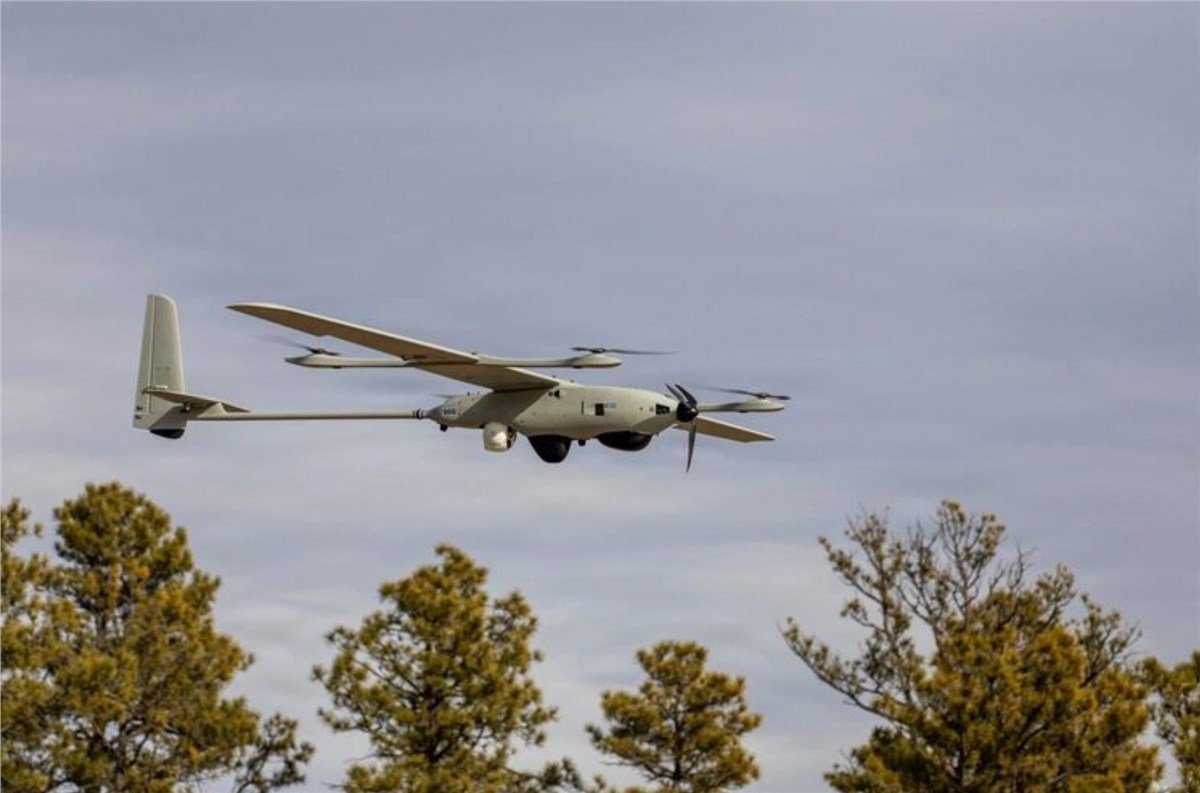
As the U.S. Army pushes toward a fully connected battlefield, Redwire’s Stalker Uncrewed Aircraft System (UAS) is emerging as a linchpin in service modernization efforts. From training operators at the U.S. Army Aviation Center of Excellence to supporting Long-Range Reconnaissance contracts worldwide, the combat-proven Stalker has demonstrated its versatility across multiple theaters.
That adaptability took center stage during the Army’s Ivy Sting IV exercise with the 4th Infantry Division at Fort Carson, Colorado. Built on a Modular Open Systems Approach (MOSA), the Stalker—a Group 2 fixed-wing vertical takeoff and landing UAS—showcased its ability to integrate seamlessly with the Army’s Next Generation Command and Control (NGC2) tactical network. Unlike traditional platforms that require extensive configuration, the Stalker populated the network as a native, discoverable node upon entry, delivering real-time position data and full-motion video across the entire NGC2 ecosystem.
This integration represents a fundamental shift in how battlefield intelligence is gathered and shared. During Ivy Sting IV, the Stalker did not operate as an isolated sensor but as a fully integrated routing node within the NGC2 mesh. By leveraging open-architecture waveforms, it extended network reach to the tactical edge, ensuring reconnaissance data flowed directly to authorized users on the Integrated Tactical Network. In one demonstration, the Stalker populated directly into a Stryker Infantry Carrier Vehicle, feeding full-motion video for immediate battle damage assessment. Data also streamed into the Artillery Execution Suite, enabling the 4th Infantry Division’s DIVARTY to process fire missions and assess targets with unprecedented speed.
“As the only fixed-wing VTOL to support this exercise, the Stalker’s deployment demonstrates how modularity results in ease of integration with multiple Army networks,” said Joshua Stinson, Chief Growth Officer at Redwire Defense Tech. “Its endurance and maturity allow it to fulfill brigade-level tasks normally covered by Group 3 aircraft—but with a much smaller logistics footprint.”
The exercise underscores the Pentagon’s Joint All-Domain Command and Control (JADC2) vision: linking sensors and weapons across all military domains into a single, secure network. By eliminating legacy system bottlenecks, NGC2 integration delivers a unified battlefield picture that accelerates decision-making and enhances mission success.
Redwire’s Flight Operations team has embedded with the 4th Infantry Division throughout the Ivy Sting series, working alongside over 6,000 soldiers. As the Army moves toward Project Convergence-Capstone 6, this “plug-and-fight” capability sets the benchmark for future networked operations. With its ability to serve as both sensor and network node, the Stalker is proving essential to making the data-centric battlefield a reality for the modern warfighter.
