

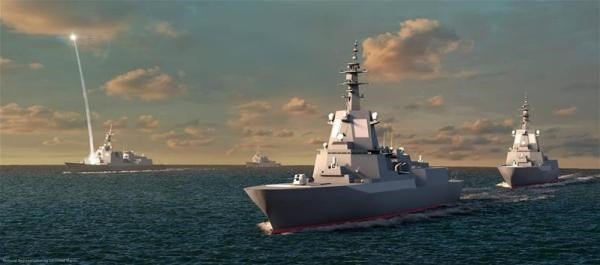
The Japan Ministry of Defense (JMOD) has taken a major step forward in its naval modernization, taking delivery of its second AN/SPY-7(V)1 radar suite from Lockheed Martin. The delivery, announced March 14, 2026, supplies the core sensor technology for the nation’s new fleet of Aegis System Equipped Vessels (ASEV) and was coordinated through Mitsubishi Corporation.
At the heart of this delivery is the AN/SPY-7(V)1, a radar system that redefines naval situational awareness. Unlike traditional mechanical radars, Lockheed Martin’s solid-state design offers unparalleled sensitivity and precision. Its software-defined architecture allows it to adapt to emerging threats in real-time, making it a formidable tool against the complex aerial and missile threats prevalent in today’s security environment.
“The speed and maturity of the SPY-7 radar are on full display with this delivery,” stated Chandra Marshall, vice president of Multi-Domain Combat Solutions at Lockheed Martin. “This technology provides Japan with a decisive advantage, offering the detection range and tracking fidelity needed to engage multiple, diverse threats simultaneously and keep their naval forces safe.”
The SPY-7’s capability is the cornerstone of the ASEV program’s defensive power. It enables the Aegis Combat System to paint a comprehensive picture of the battle space, allowing operators to discriminate between low-earth orbit objects and high-speed maneuverable warheads. This level of performance is why the radar has been selected by both the U.S. and a growing number of international allies, validating its position as a world-class, mature technology.
Following the successful first delivery in June 2025, this second shipment continues the program’s momentum. Lockheed Martin will now oversee full system integration and testing of this shipset to ensure peak performance. This process significantly mitigates integration risk and paves the way for the on-schedule commissioning of both ASEVs in Japanese Fiscal Years 2027 and 2028, cementing Japan’s naval capabilities for decades to come.
