

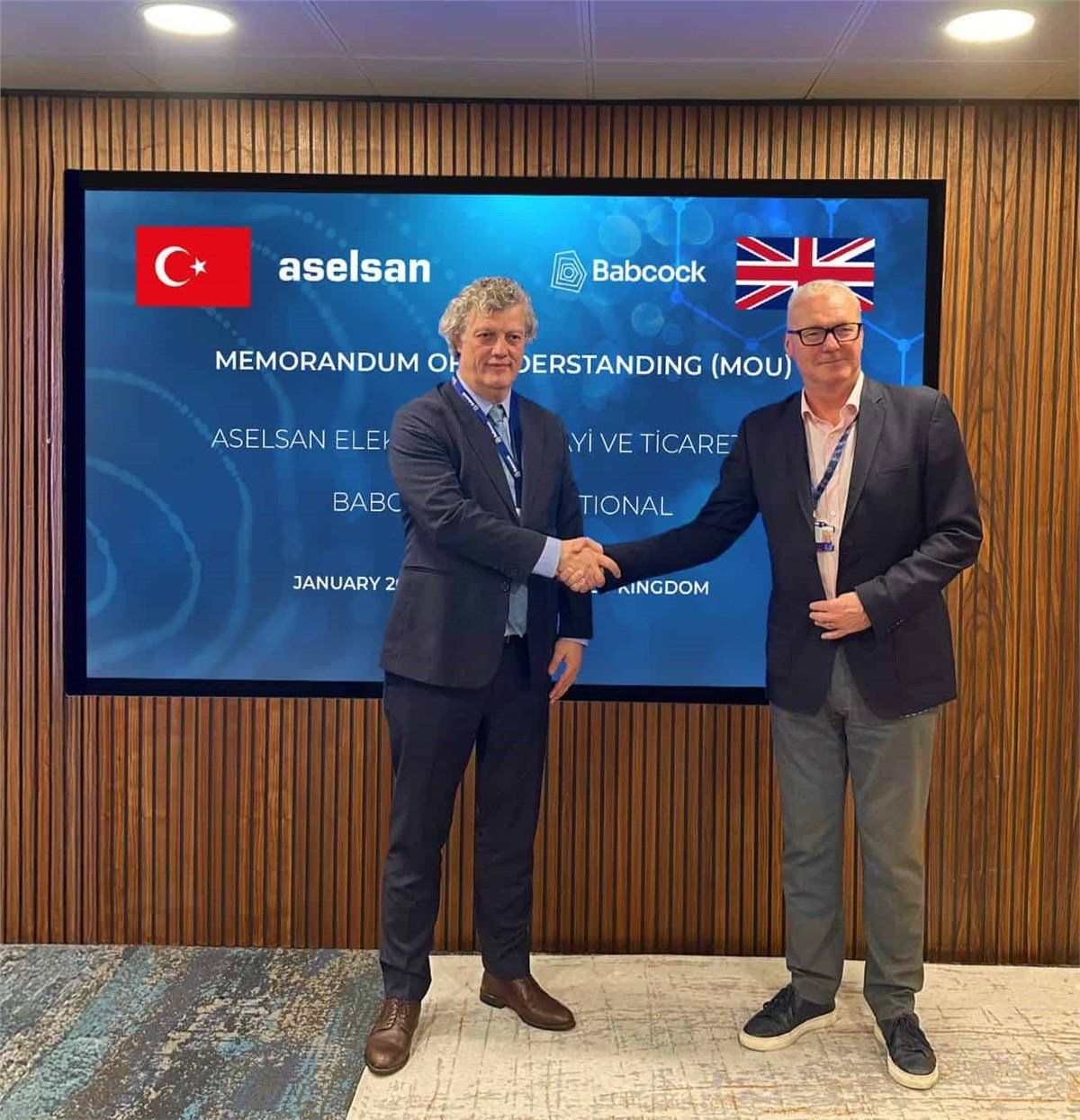
Babcock has entered into a Memorandum of Understanding with Turkish defence electronics firm ASELSAN to jointly address the Royal Air Force’s requirement for a Surface Electronic Warfare Threat (SEWT) training system. The initiative forms part of the wider Next Generation Operational Training (NGOT) programme, which seeks to modernise how aircrew prepare for increasingly complex combat environments.
The proposed system is designed to deliver high-fidelity simulation of modern Integrated Air Defence Systems. By replicating the behaviour and sophistication of real-world threats, it aims to expose aircrew to operationally realistic scenarios without leaving the training environment. This approach reflects a broader shift within defence training toward scalable, technology-led solutions that can adapt to emerging threats.
Under the terms of the MOU, Babcock and ASELSAN will combine operational insight with electronic warfare engineering expertise. ASELSAN brings field-proven defence electronics capabilities, while Babcock contributes deep knowledge of UK military training requirements and platform integration. The partnership will explore how these complementary strengths can be aligned to offer a credible, sustainable solution tailored to the RAF’s evolving needs.
Austin Lewis, Vice President Future Business at Babcock, said the company is focused on ensuring aircrew have access to training that matches the demands of modern operations. “Through this MOU, we are exploring how our complementary strengths with ASELSAN could align to support the RAF’s future training requirements,” he said. “This collaboration allows us to assess potential routes together, bringing technical insight and integrated systems expertise into a shared effort.”
Erhan Ülgen, ASELSAN’s Business Development and Marketing Director for Europe and America, described the agreement as a significant step. “ASELSAN is excited to establish and sustain a lasting partnership with Babcock supporting the SEWT as part of NGOT,” he said. “Our globally tested and proven expertise in electronic warfare will create great value for the RAF and ensure readiness of air crews in the face of modern and future challenges.”
Both companies view the collaboration as an opportunity to demonstrate how industry partnerships can address complex defence training requirements. By combining simulation realism with systems integration knowledge, the aim is to deliver a training capability that is not only effective today but can evolve alongside future threats.
