

CHRISTCHURCH, New Zealand
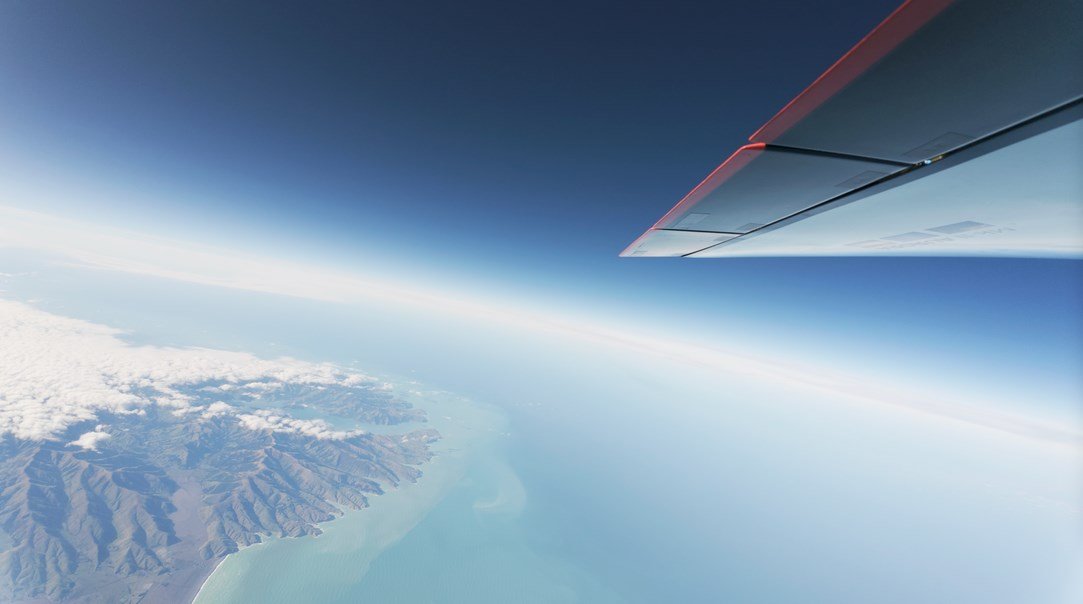
Dawn Aerospace has successfully flown the Aurora spaceplane carrying California Polytechnic State University’s student-built payload, reaching Mach 0.79 and an altitude of 37,000 feet.
This flight on June 24th—Aurora’s first from Dawn’s newly operational launch facility at Tawhaki National Aerospace Centre—carried Cal Poly’s payload, making it the first U.S. student-built experiment to fly aboard Aurora and marking a major milestone for university-led research in reusable spaceplane development.
“This mission is putting student-built hardware on the frontlines of aerospace innovation,” said Dr. Kurt Colvin, Cal Poly professor and payload advisor. “Working with a next-gen spaceplane like Aurora gave our team firsthand experience integrating a payload for a reusable commercial spaceplane — a paradigm shift from traditional expendable rocket launches.”
Cal Poly’s payload was designed to test whether student-built hardware could withstand the rigors of high-altitude, spaceflight-like environments. Using a modified data system from Bolder Flight Systems, the mission focused on proving that the team could build and operate a payload ready to integrate with a commercial spaceplane. Just as importantly, it served as a training mission—giving students hands-on experience and laying the groundwork for future Cal Poly launches from the upcoming Paso Robles, California Spaceport.
Aurora’s horizontal launch architecture — taking off and landing like a conventional aircraft — offers unparalleled benefits for academic institutions:
- Rapid, repeatable operations enabled by true reusability, cutting turnaround time from months to days.
- Dramatically lower infrastructure costs by eliminating the need for costly vertical launch pads and fixed facilities.
- Expanded university access through commercial partnerships that open new pathways for research and innovation.
This mission builds on Dawn’s recently announced partnership with the State of Oklahoma and the Department of Aerospace and Aeronautics (formerly Oklahoma Space Industry Development Authority), to bring the Aurora spaceplane to the Oklahoma Air & Space Port in Burns Flat—operations set to begin with first flights in 2027. This collaboration underscores a major leap forward in scaling reusable suborbital spaceflight across the United States with operations at the Oklahoma Air & Space Port set to extend Aurora’s flight profile to 338,000 ft (100 km). By teaming with Cal Poly, Dawn is demonstrating how academic institutions can help lead this transformation while highlighting the opportunity for U.S. research units to leverage Oklahoma’s forward-looking spaceport as a national hub for innovation and direct access to space.
