

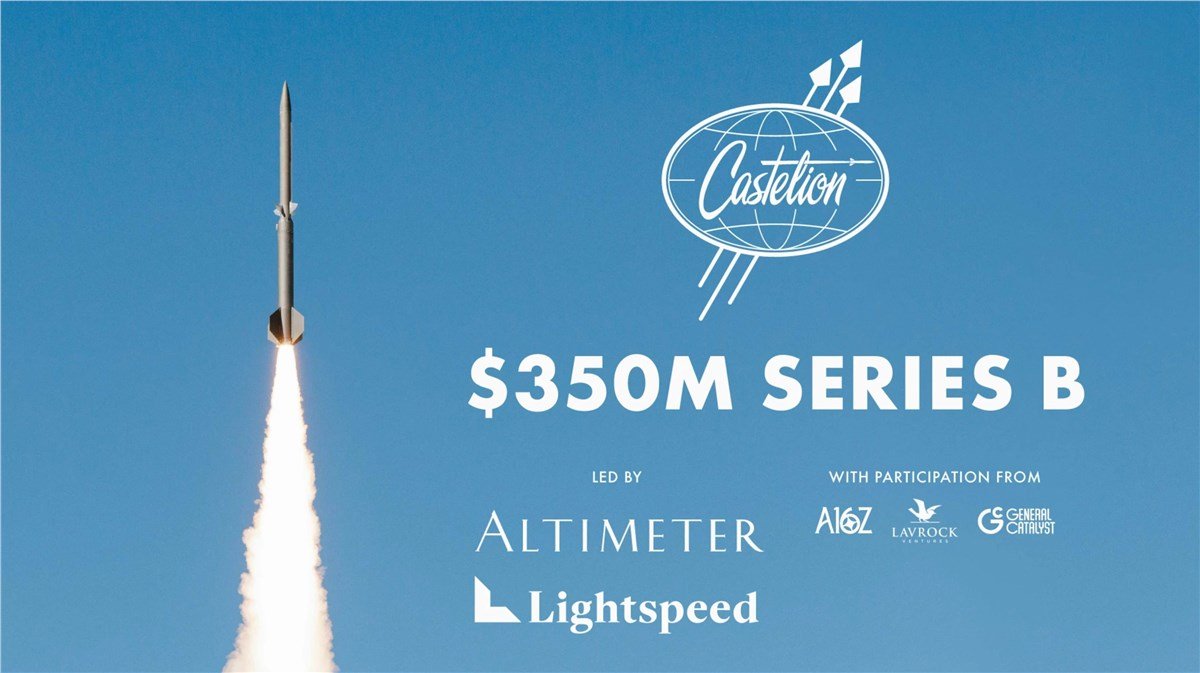
Defense technology firm Castelion has closed a $350 million Series B funding round, led by Altimeter Capital and Lightspeed Venture Partners, to accelerate mass production of its hypersonic weapons. The capital injection directly supports a top Pentagon modernization priority: building a scalable industrial base for hypersonic munitions to counter pacing threats.
The funding will propel three critical initiatives: integrating Castelion’s first hypersonic weapon, Blackbeard, with U.S. Army and Navy platforms; tooling and ramping up its new solid rocket motor manufacturing campus, Project Ranger, in New Mexico; and executing an aggressive 2026 test campaign. Project Ranger is designed to ultimately produce thousands of missiles annually and create hundreds of skilled jobs.
“Blackbeard helps close America’s hypersonic capability gap,” said CEO Bryon Hargis. “This funding lets us build fast, test often, and produce at volumes that matter in the real world.”
Investors highlighted the unprecedented speed of Castelion’s progress and its focus on industrial capacity. Founded by SpaceX alumni, the company has conducted over 25 flight tests in just 2.5 years, moving from a clean-sheet design to major integration contracts.
“We’re leading this round so they can rapidly scale production of one of the nation’s most critical capabilities: affordable, mass-produced hypersonics,” said Erik Kriessmann of Altimeter Capital.
The company’s philosophy breaks the traditional defense cost-speed paradigm. By focusing on low-cost, manufacturable architectures from the start, Castelion compresses development cycles from years to months. In 2025 alone, it conducted more than 20 flight tests, validating key internally manufactured subsystems.
“Castelion isn’t just building missiles; they’re rebuilding America’s industrial depth,” noted Connor Love of Lightspeed Venture Partners.
The round, which also included Andreessen Horowitz, General Catalyst, and Lavrock Ventures, underscores a growing investor focus on defense innovation that delivers tangible production capacity, not just prototypes. As General Catalyst’s Paul Kwan stated, “Modern deterrence demands hypersonic capability at a pace, scale and cost that the U.S. has never seen.”
