

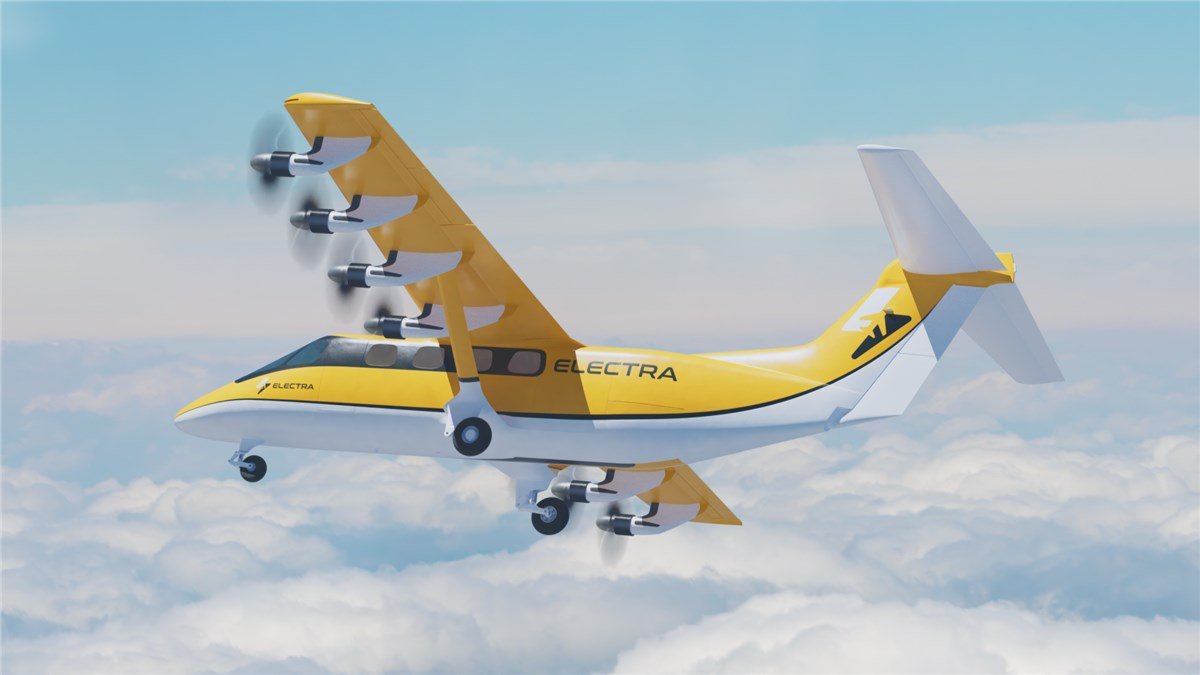
In a significant move to advance the future of regional air travel, Electra has announced a major expansion of its engineering and production facilities in both the United States and Europe. This growth fuels the development of the company’s flagship EL9, a nine-passenger hybrid-electric aircraft designed for ultra-short takeoffs and landings.
The company’s headquarters at Manassas Regional Airport in Virginia has been bolstered by a new 15,000-square-foot hangar and additional office space. This expansion will accommodate Electra’s rapidly growing team, which has more than doubled in size this year. Simultaneously, the company has increased the footprint of its European R&D center in Bleienbach, Switzerland, strengthening its access to top-tier engineering talent on the continent.
“We are building the infrastructure and team to make Direct Aviation a reality,” said Marc Allen, CEO of Electra. “These expansions provide our world-class engineers the resources they need to bring the revolutionary EL9 to market, fulfilling a vision for regional travel that is more sustainable, affordable, and convenient.
The EL9 is engineered to operate in spaces as short as 150 feet, a capability enabled by its unique combination of hybrid-electric propulsion and blown-lift aerodynamics. This performance opens up thousands of underutilized locations—from small community airfields to non-traditional sites like fields or repurposed lots—as potential access points. By bypassing crowded major hubs, the EL9 promises to drastically cut travel times for regional trips.
The aircraft’s groundbreaking technology has already been validated through an extensive flight test campaign with Electra’s two-seat EL2 Goldfinch prototype. Demonstrations have included operations from austere environments, university campuses, and in partnership with the U.S. Air Force, proving its versatility for both commercial and defense applications.
Electra has outlined an ambitious certification timeline, targeting the start of EL9 flight tests in 2027. The company plans to achieve FAA certification and begin entry-into-service for the new aircraft in late 2029, heralding a new era in efficient regional connectivity.
