

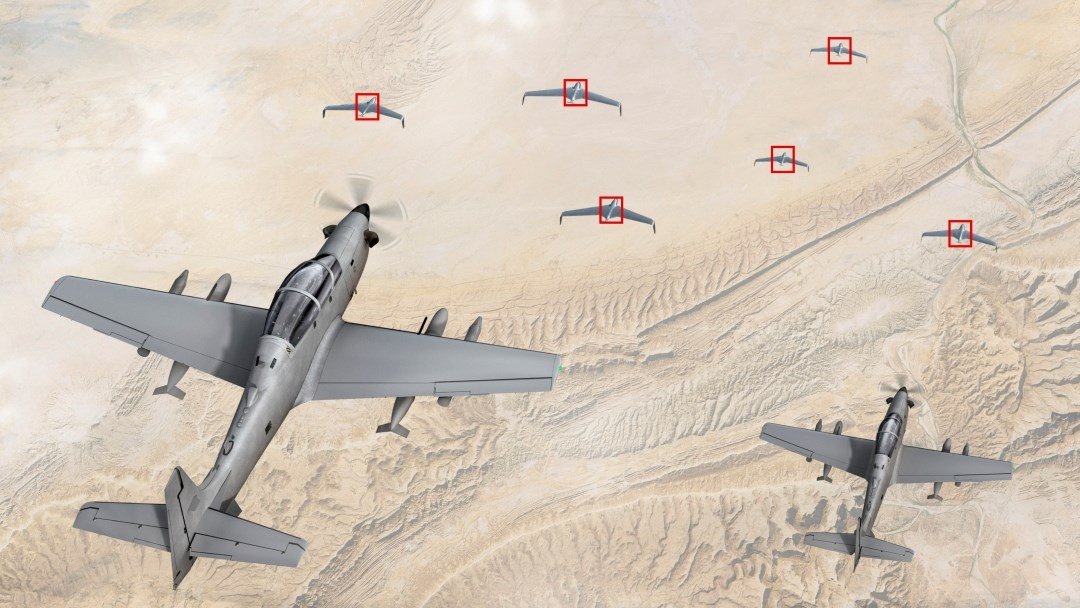
In a move that redefines the economic calculus of modern warfare, Embraer Defense & Security has partnered with technology firm Valkyrie Aero to transform the A-29 Super Tucano into a dedicated drone-hunter. The collaboration integrates Valkyrie’s proprietary “Gunslinger” AI suite into the turboprop platform, offering militaries a low-cost alternative to using expensive fighter jets for Counter-Unmanned Aerial Systems (C-UAS) missions.
The core of the upgrade is Valkyrie’s Gunslinger, an artificial intelligence engine designed for real-time tactical decision-making. By enhancing the A-29’s existing sensor data, the AI enables the “Find, Fix, and Finish” of hostile drone threats with greater speed and accuracy. This addresses a critical pain point for global defense forces: the unsustainable cost of scrambling high-end, multi-role fighters to eliminate slow-flying, one-way attack drones.
The A-29 Super Tucano, already proven with over 60,000 combat flight hours, is uniquely suited for this mission. Unlike faster jets that struggle to slow down enough to engage low-speed UAS effectively, the Super Tucano can match the velocity of loitering munitions and attack drones. This flight envelope provides a stable and precise firing platform for its arsenal of guns, guided rockets, and other munitions, all while benefiting from an extended loiter time that keeps eyes on the battlefield for hours.
“Pairing the A-29 with the Gunslinger AI creates a cost-crushing advantage,” said Marcio Monteiro, Market Intelligence VP at Embraer Defense & Security. “We are taking the gold standard of light attack and giving it the brain to outthink cheap drone swarms without breaking a military’s budget.”
Chris Turner, Senior VP of Corporate Strategy at Valkyrie Aero, emphasized the solution’s tactical roots. “Gunslinger wasn’t built in a vacuum; it was born from the immediate needs of frontline warfighters,” he stated. By installing this scalable AI aboard the A-29, the partnership ensures that smaller air forces—or those seeking to preserve their high-end assets—can field a persistent, lethal, and cost-effective response to the evolving drone threat.
