

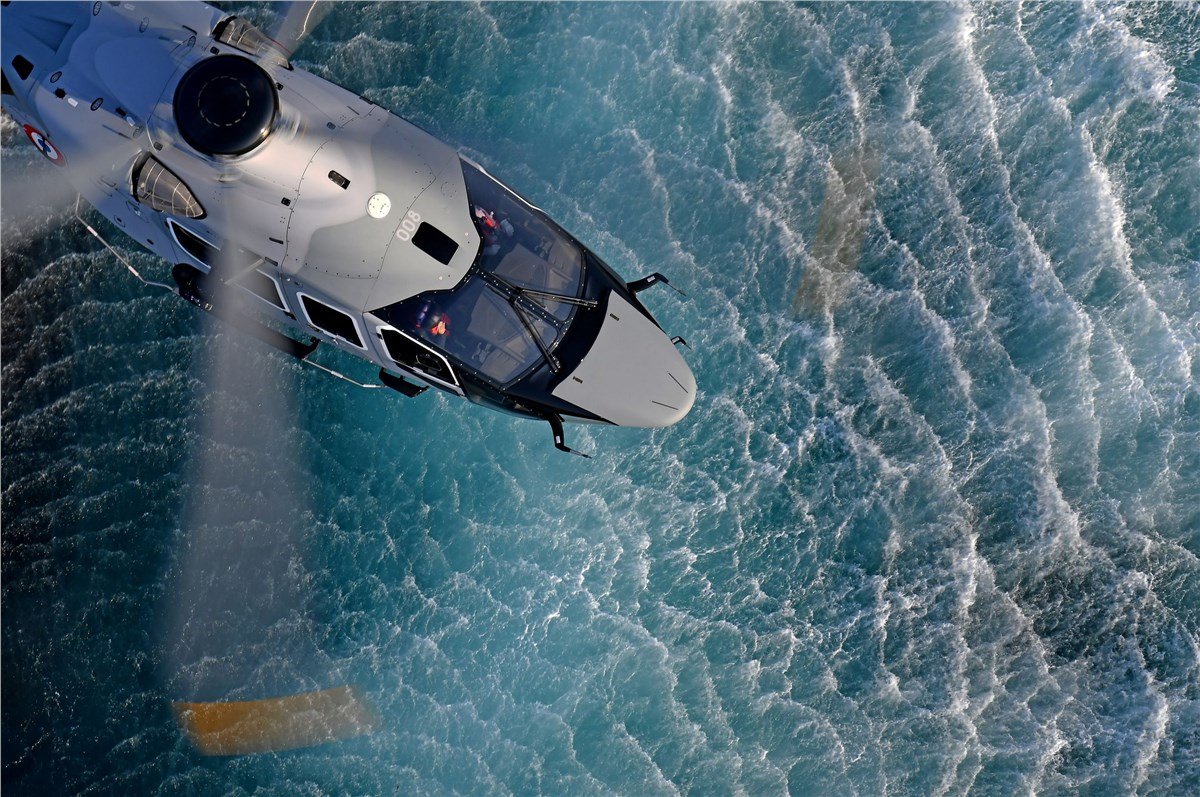
In an era of intensifying geopolitical rivalry, nations are scrutinizing their military capabilities to ensure strategic advantage. At Airbus Helicopters, this demand for superiority and survivability fuels a philosophy of perpetual evolution, where military requirements are the primary catalyst for innovation. According to Stefan Thomé, Head of Programmes, the company’s strategy moves far beyond simply adapting civil aircraft for military use. Instead, it focuses on embedding continuous, significant enhancements into purpose-built military rotorcraft, ensuring they remain decisive on the battlefield.
This commitment is evidenced by major investments in platforms like France’s H160M Guépard and the comprehensive mid-life upgrade for the Tiger attack helicopter. These programs are not endpoints but stepping stones, paving the way for next-generation capabilities. A fundamental shift in how these advancements are achieved has also occurred. The era of rigid, multi-year contracts that simply delivered pre-defined technology is over. Today, a doctrine of co-creation prevails. “Industry and militaries together create solutions,” Thomé explains, highlighting a collaborative ecosystem where armed forces work alongside manufacturers to develop and refine capabilities.
This ecosystem draws on a wide network, including universities, suppliers, and Airbus’s own innovation teams, who constantly test new possibilities. The result is a range of helicopters with modular architectures that allow for rapid reconfiguration and the integration of user-driven upgrades. The H145M stands as a prime example of this versatility. It can be swiftly converted from a trainer to a reconnaissance asset, and further to a light attack helicopter. Its cutting-edge connectivity transforms it into a flying command post—a secure node in a tactical data network that reduces pilot workload and sharpens situational awareness.
The pinnacle of this continuous development is the H160M, designed from the ground up with specialized military systems and the advanced FlytX avionics suite. Looking ahead, the company is focused on a future of interconnected battlefields. Teaming capabilities are being developed to allow helicopters to operate seamlessly with various drones, an approach described as “drone agnostic.” This shift towards a networked battlespace brings data to the forefront. “Receiving, sending, processing and storing data, as well as data security, is becoming increasingly important,” Thomé notes. He emphasizes that helicopters, drones, and ground stations cannot be viewed in isolation; they must be conceived as a unified network. This digital dimension is now a critical strategic element, ensuring that future military products are not just machines, but intelligent, connected nodes in a larger, more powerful system.
