

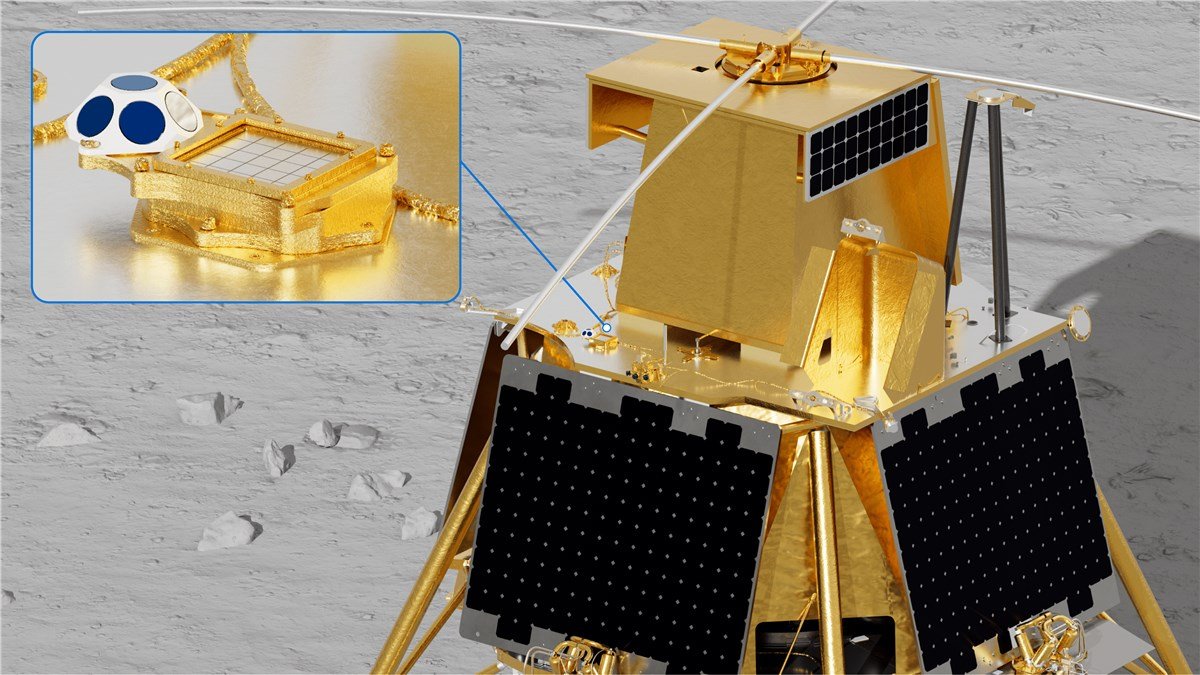
Firefly Aerospace has expanded the commercial payloads for its second Blue Ghost lunar mission, announcing a new agreement with Volta Space Technologies. Volta’s contribution will be a LightPort wireless power receiver, which will fly on the Blue Ghost Mission 2 lander destined for the far side of the Moon. This payload is a critical technology demonstration for Volta’s planned LightGrid, a future orbital network designed to beam solar power via laser to surface infrastructure.
“This mission enables the critical demonstrations needed for lasting lunar operations,” said Firefly CEO Jason Kim, highlighting the partnership’s role in developing lunar utilities. Volta CEO Justin Zipkin stated the collaboration is “an important step forward” for proving their technology in the actual lunar environment, bringing a fully integrated power grid for the Moon closer to reality.
Based in Montreal, Volta becomes the sixth payload provider from five different nations on the mission. The international manifest includes significant instruments like NASA’s LuSEE-Night radio telescope, the ESA’s Lunar Pathfinder satellite, the UAE’s Rashid Rover 2, and Fleet Space’s SPIDER payload. Together, these will study lunar geology, enhance surface mobility, improve communications, and investigate cosmic origins.
Blue Ghost Mission 2 will also debut Firefly’s new Ocula lunar imaging service. After deploying the lander, the mission’s Elytra spacecraft will remain in orbit for over five years, using high-resolution telescopes to map mineral deposits and future landing sites in ultraviolet and visible light, providing key cislunar situational awareness.
Firefly reports that qualification testing for the integrated Blue Ghost and Elytra spacecraft is progressing well. The team has begun assembling flight hardware and has already accepted and tested a majority of the payloads at the company’s spacecraft facility, keeping the mission on track.
