

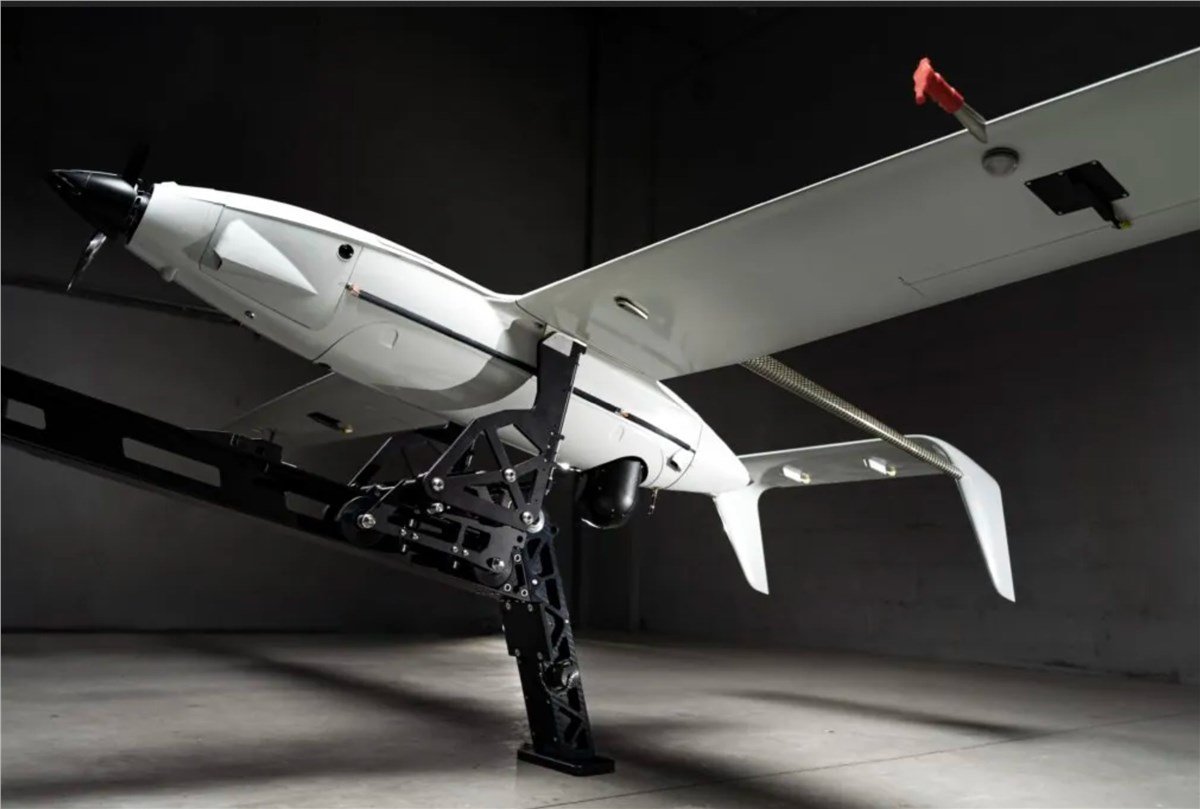
Ukraine’s Raybird UAV has entered combat service in a new hydrogen-electric hybrid configuration, marking a significant step in operational drone technology. Developed by Skyeton, this variant replaces the traditional internal combustion engine with a hydrogen fuel cell powering an electric motor, resulting in a completely redesigned airframe optimized for the new propulsion system.
While the standard Raybird boasts over 28 hours of endurance, the current hybrid version achieves approximately 12 hours of flight time. Engineers are actively working to extend this to 20 hours. The key advantage lies in combining the long-endurance requirement for deep reconnaissance—missions often exceeding 10 hours—with the benefits of electric propulsion: high reliability, reduced maintenance, and a vastly reduced thermal and acoustic signature, making the drone harder to detect.
“We have converted two years of laboratory testing into a new aircraft concept,” said Skyeton CEO Roman Knyazhenko. The design maintains the same class and weight but is a fundamentally redesigned platform centered on electric propulsion, using hydrogen to enable the necessary endurance.
The deployment follows successful interagency testing that began in December 2025. Skyeton has engineered the system for combat resilience, ensuring stable operation in extreme temperatures ranging from -35°C to +55°C. The company is also providing it as a turnkey solution, offering pre-filled, swappable hydrogen tanks or compact mobile units for on-site hydrogen production to simplify frontline logistics.
The hybrid Raybird is now preparing for formal codification with the Ukrainian Defense Forces to enable wider adoption, representing a practical move toward more sustainable and stealthy reconnaissance capabilities on the modern battlefield.
