

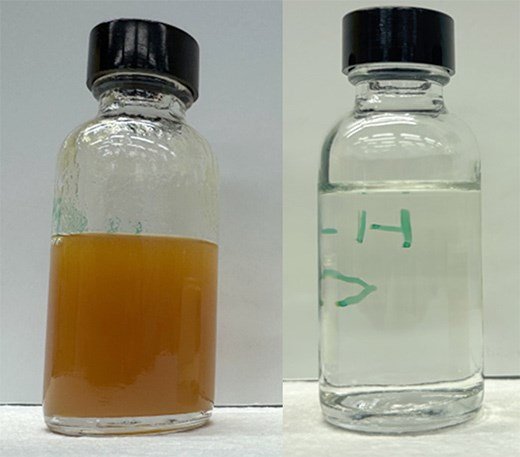
In a significant step toward carbon-neutral aviation, Japanese engineering giant IHI has successfully synthesized Sustainable Aviation Fuel (SAF) directly from carbon dioxide (CO2) and hydrogen. The fuel sample has demonstrated excellent properties in an evaluation by Washington State University, a globally recognized authority for alternative aviation fuel testing.
This breakthrough is part of IHI’s development of a novel technological pathway that directly synthesizes SAF precursor hydrocarbons from CO2 and green hydrogen, bypassing traditional biomass-based methods. Since 2022, the company has collaborated with Singapore’s Agency for Science, Technology and Research (A*STAR) through its Institute of Sustainability for Chemicals, Energy and Environment (ISCE²). Their joint research has achieved world-class catalytic performance in laboratory settings.
Progress accelerated in September 2025 when IHI began synthesizing liquid hydrocarbons in a test unit at ISCE²’s campus. The company then successfully upgraded these hydrocarbons into a sample fitting the jet fuel range. To validate its quality, the sample was sent for rigorous prescreening at Washington State University’s Bioproducts, Sciences, and Engineering Laboratory, which is recognized by ASTM International.
The results were highly promising. “IHI’s new candidate jet fuel sample met or exceeded all the testing characteristics we look for in early SAF candidates,” stated Dr. Joshua Heyne, Director of the laboratory. He highlighted favorable hydrocarbon composition and critical cold-flow properties like viscosity, which are essential for aircraft operation at high altitudes.
This successful evaluation marks a crucial first step toward eventual ASTM International qualification, the necessary standard for commercial use in aviation. The development addresses a pressing global need. With the International Civil Aviation Organization (ICAO) targeting net-zero carbon emissions for the aviation sector by 2050, SAF is seen as the most viable path to decarbonize existing fleets.
IHI’s technology offers a potential pathway for producing fuel without competing for agricultural land or resources, utilizing captured CO2 instead. The company now aims to advance this synthesis process, focusing on improving efficiency and stability to establish an economically viable and scalable production method. This milestone underscores IHI’s commitment to pioneering engineering solutions for a sustainable future in global air travel.
