

For over 35 years, Aurora Flight Sciences, a Boeing company, has transformed advanced research into operational autonomous flight systems. By uniquely integrating simulation, rigorous flight testing, and AI-enabled software, Aurora is defining how future aircraft will intelligently learn, adapt, and operate safely.
“Our integrated approach bridges the gap between theory and reality,” said Dr. Mia Stevens, chief engineer of Aurora’s ATLAS program. “We connect foundational research with real aircraft and flight data to build the intelligent systems that will guide next-generation aviation.”
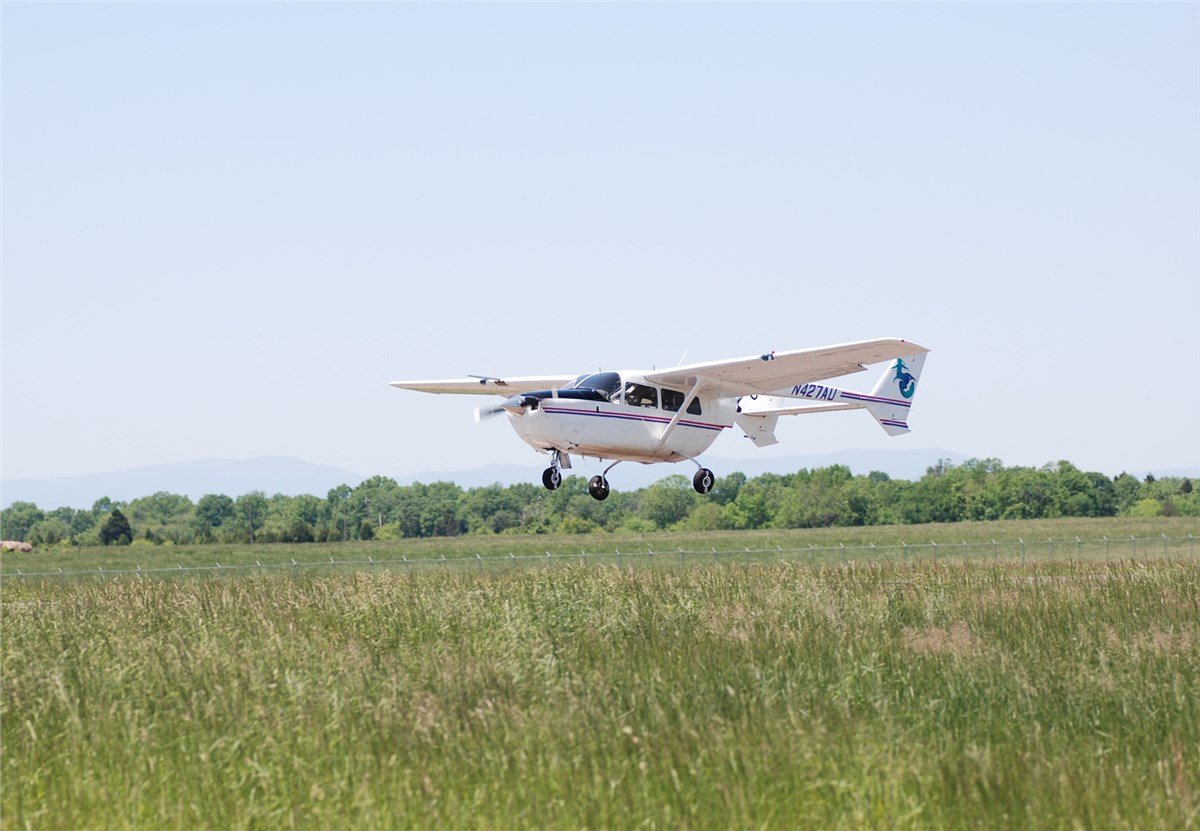
A cornerstone of this effort is Aurora’s legacy in optionally piloted aircraft (OPA), which serve as a critical bridge to full autonomy. Platforms like the Centaur OPA allow teams to conduct complex, repeatable testing in live airspace with or without a safety pilot onboard, validating algorithms and building essential trust in human-machine collaboration.
This work is driven by deep expertise in Guidance, Navigation, and Control (GNC) and perception systems, enabling aircraft to sense their environment, make decisions, and execute precise maneuvers. These core capabilities are applied across a diverse portfolio:
- Centaur demonstrates safe integration into the National Airspace System.
- The SKIRON-X sUAS acts as a rapid testbed for new autonomy and perception software.
- The AACUS program successfully converted a UH-1 helicopter to perform full mission cycles—takeoff, flight, landing, and delivery—autonomously.
Aurora’s human-centric philosophy ensures these systems are designed for trust. The development process begins with studies in simulated environments, using biometrics to understand pilot-automation interaction. New technology is then matured in high-fidelity hardware-in-the-loop simulators before progressing to supervised flight tests.
In this vision, autonomy augments human capability. It provides redundancy for increased safety and handles precise, repetitive tasks, freeing human operators to manage complexity and exercise judgment. This synergistic partnership aims to unlock more capable, adaptable, and intelligent aircraft for the future of flight.
