

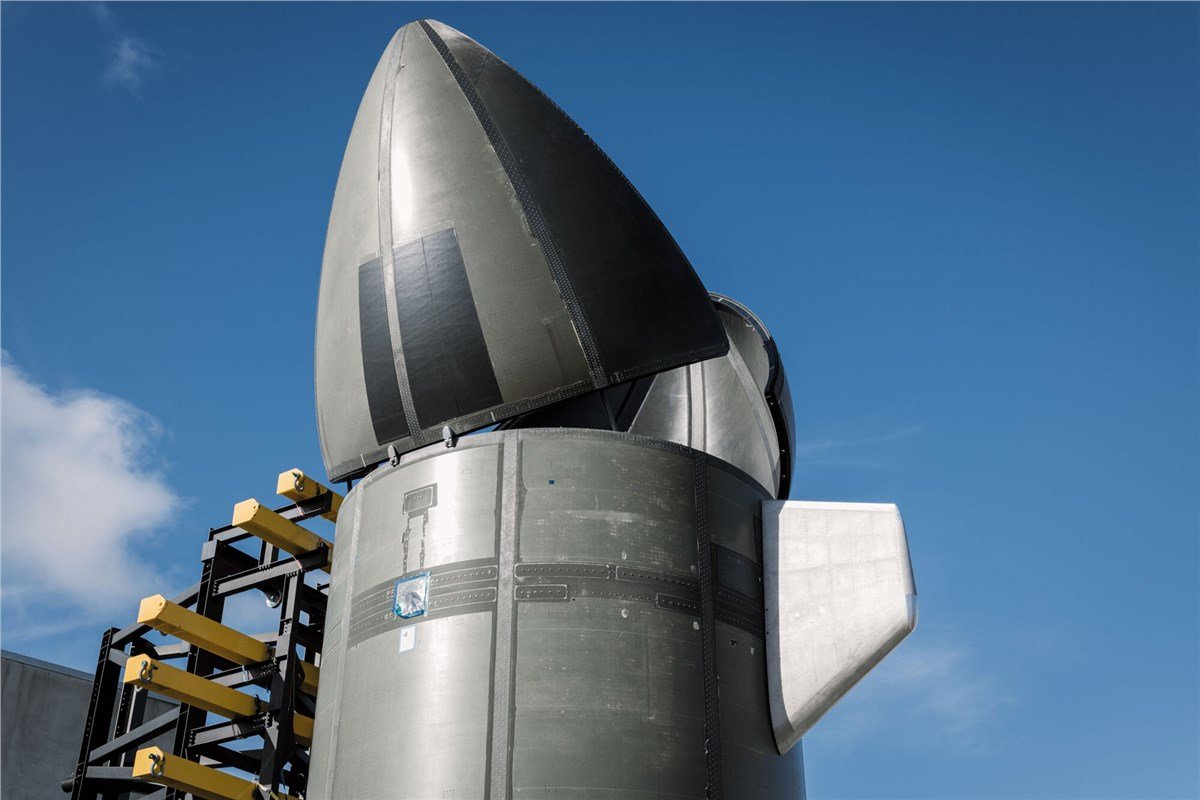
Rocket Lab has passed a pivotal milestone in its Neutron rocket program, successfully completing qualification tests for the vehicle’s revolutionary “Hungry Hippo” fairing. This critical component is now enroute to the launch site in Virginia, marking a major step toward Neutron’s inaugural flight.
Unlike conventional rocket fairings that are jettisoned during ascent, Neutron’s “Hungry Hippo” is a fundamental part of its reusability. The fairing halves are designed to open in space to deploy the second stage and payload, then close again for the entire first stage’s return to Earth. This world-first captive design for a reusable commercial rocket eliminates the need for costly, complex marine recovery of fairings and streamlines the vehicle for rapid turnaround and a high launch cadence.
“This qualification is a fantastic marker of progress,” said Shaun D’Mello, Vice President of Neutron at Rocket Lab. “We’re building a unique rocket at a competitive pace, and shipping flight hardware proves it.”
The rigorous qualification campaign subjected the full-scale carbon composite structure to extreme conditions exceeding 125% of expected flight loads. Key tests included simulating the immense aerodynamic forces of “Max Q”—the phase of maximum dynamic pressure—with 275,000 pounds of force distributed across the fairing. Engineers also validated the fairing’s ability to open and close in less than 1.5 seconds under flight-like conditions and tested integrated systems with flight software and hardware.
With the fairing design now flight-qualified, the hardware will be integrated with Neutron’s first stage at Rocket Lab’s Launch Complex 3 in Virginia. The integrated vehicle will then undergo final pre-launch testing, including static fire engine tests.
Development of the Neutron rocket, which will be the world’s largest carbon composite launch vehicle with a payload capacity of up to 13,000 kg, began in late 2021. With this latest achievement, the program remains on track for its first launch in 2026.
