

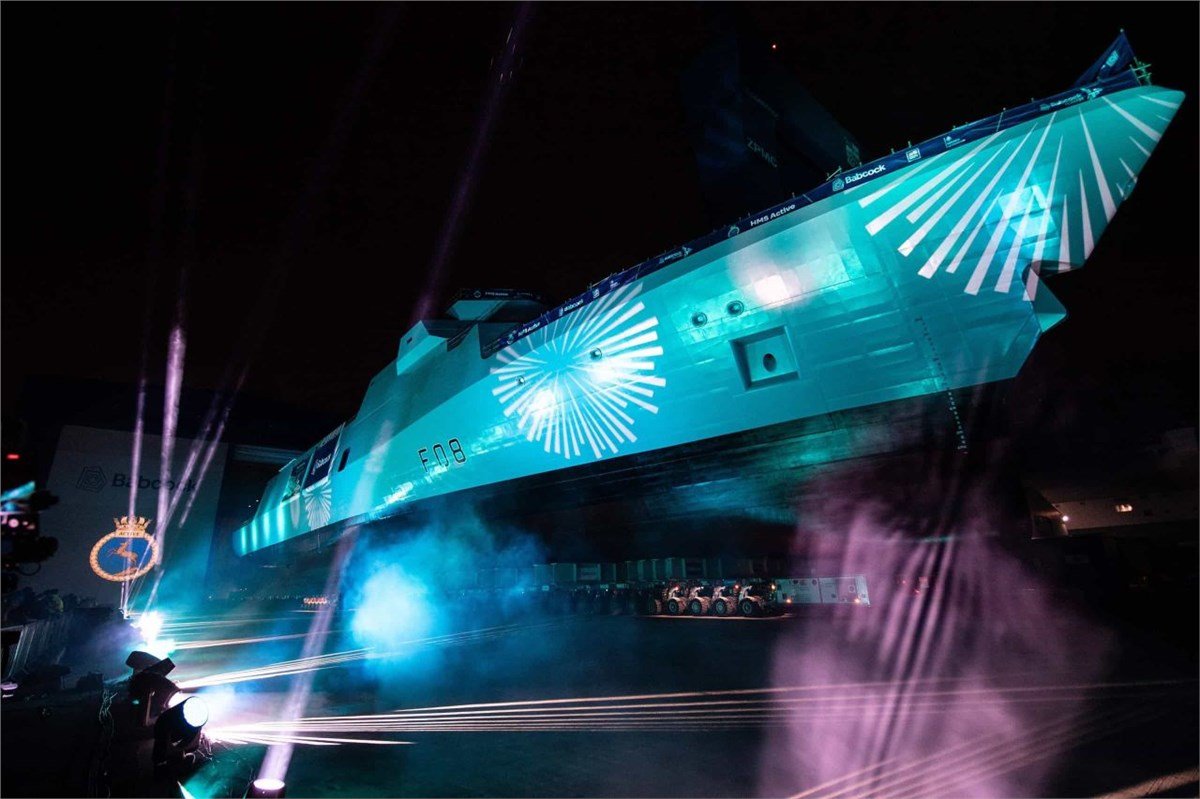
The United Kingdom’s naval ambitions moved closer to reality as two major milestones were achieved in the construction of the Royal Navy’s new Type 31 frigates. In a dual ceremony at Babcock’s Rosyth dockyard, HMS Active was formally “rolled out” of the assembly hall, while construction officially began on its sister ship, HMS Bulldog.
The roll-out of HMS Active signifies the physical completion of the frigate’s structure. The 5,700-tonne vessel will now move to the outfitting quay where its sophisticated combat systems, sensors, and internal equipment will be installed. Simultaneously, a steel-cutting ceremony marked the start of production for HMS Bulldog, initiating the build process for the fifth and final vessel in the Inspiration-class.
These events underscore the momentum of a programme designed to deliver a modern, adaptable fleet. The five frigates—HMS Venturer, HMS Active, HMS Formidable, HMS Campbell, and now HMS Bulldog—are being constructed using a modular method within Babcock’s purpose-built Venturer Hall, a facility representing a £200 million investment. Once operational, the ships will be versatile assets capable of undertaking a wide range of missions, from intelligence gathering and maritime interdiction to humanitarian relief and defence engagement.
Beyond the naval capability, the programme is generating significant economic and industrial impact. The Type 31 project sustains approximately 2,500 jobs nationwide, split evenly between the Rosyth shipyard and the wider UK supply chain. Furthermore, it is investing in the future of British manufacturing through over 400 apprenticeship roles, developed in partnership with local colleges, ensuring the transfer of critical engineering skills to a new generation.
Minister for Defence Procurement and Industry, Luke Pollard, hailed the day as a showcase for Scottish industry. “From starting construction on HMS Bulldog to unveiling the impressive HMS Active, this programme is delivering world-class warships for the Royal Navy and real economic benefits for communities across Scotland,” he stated. “These ships will serve our nation for decades, and the skills we are building here will secure the future of Scottish shipbuilding for generations.”
The programme’s design, based on the British-developed Arrowhead 140 platform, has already proven its export potential, having been selected by Indonesia and Poland. This success strengthens international interoperability and cements the UK’s reputation in global naval shipbuilding, aligning with the government’s recent commitment to increase defence spending to 2.6% of GDP by 2027.
