

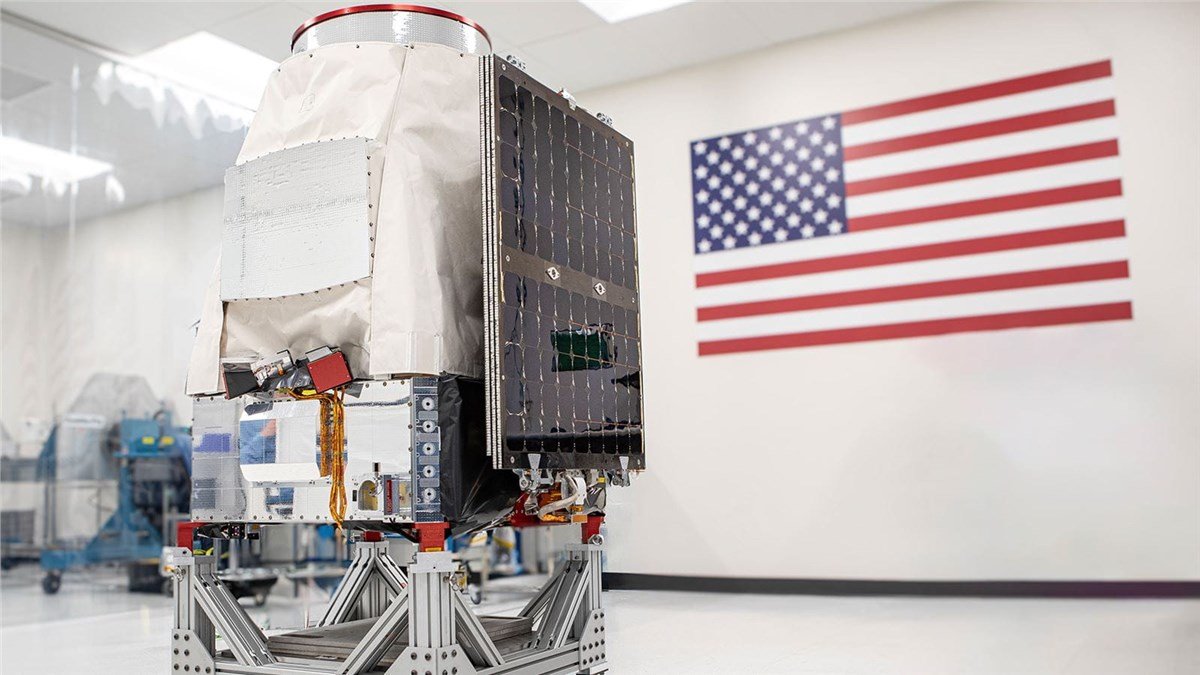
A Saturn-200 minisatellite built by RTX’s Blue Canyon Technologies has launched for NASA’s Pandora mission, dedicated to unlocking secrets of distant worlds. The mission will scrutinize the atmospheres of at least 20 exoplanets as they pass in front of their host stars, an event known as a transit. By meticulously analyzing how starlight filters through a planet’s gaseous envelope, scientists aim to decode its chemical composition, hunting for key signatures like hydrogen and water vapor that could indicate habitability.
Central to this delicate work is the satellite itself. “Pandora features the largest telescope payload ever integrated onto a Blue Canyon spacecraft,” said Chris Winslett, General Manager of Blue Canyon Technologies. He emphasized that the company’s Saturn-class platform delivers the exceptional pointing precision and stability required to make the mission’s highly sensitive observations possible.
Pandora represents a significant milestone, being the 87th spacecraft launched by Blue Canyon Technologies. Beyond manufacturing the bus—the satellite’s core structure—the company was also responsible for integrating the minisatellite with its launch vehicle and conducting initial post-launch commissioning to ensure it was operational in space.
The mission is a collaborative endeavor under NASA’s Science Mission Directorate, led by the agency’s Goddard Space Flight Center and managed by Lawrence Livermore National Laboratory. By separating the subtle atmospheric signals of exoplanets from the interfering activity of their stars, Pandora promises to deliver clearer, more accurate data than ever before. This data is crucial for advancing our understanding of planetary system formation and identifying which distant worlds might possess conditions suitable for life.
