

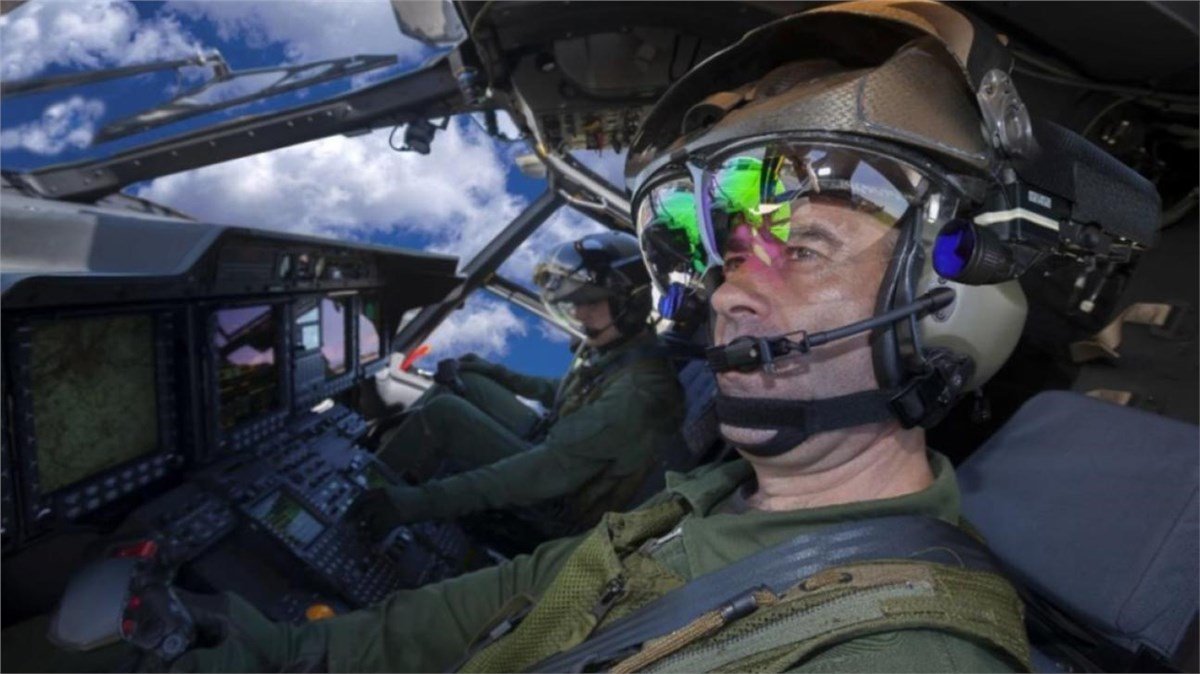
Thales is enhancing the safety and efficiency of NH90 helicopter pilots with its TopOwl Digital Display (DD) helmet, a next-generation system that provides unparalleled support in low-visibility conditions. The helmet ensures mission success by projecting a critical augmented reality view for the pilot. It synthesizes a comprehensive picture by combining terrain data, mission system information, and feeds from onboard sensors and cameras with imagery from advanced light intensifier tubes.
This integrated capability allows pilots to operate effectively day or night in degraded visual environments such as dust clouds, fog, snow, or pitch-black darkness. The result is dramatically improved situational awareness and visibility, which is vital for safety during demanding very-low-altitude flights or in poor weather.
Drawing on over two decades of expertise in helicopter display and targeting systems, Thales develops and manufactures the TopOwl DD at its Bordeaux campus. The design process involves close collaboration with industry stakeholders (BITD) and is continually refined with feedback from operational forces. A key feature is the helmet’s custom tailoring to each pilot’s unique physiology, ensuring a perfect fit that minimizes fatigue during long or arduous missions.
A new contract from NAHEMA, facilitated by the French defense procurement agency (DGA), will further advance the system. It includes improvements to the helmet’s light intensifier tube technology and covers integration, support, and spares, marking a new phase in the strategic partnership between Thales, DGA, NAHEMA, and NH Industries.
“By choosing the TopOwl DD, NAHEMA confirms the leading role of this helmet, recognized by helicopter crews for enhancing operational performance and safety,” said Florent Chauvancy, Vice President of Flight Avionics at Thales. “This contract further strengthens our strategic partnership, all committed to equipping the armed forces with cutting-edge technologies designed for the most challenging operational environments.”
This partnership underscores a shared commitment to providing armed forces with the advanced, tailored technologies required for the complexities of modern missions.
